
Back to Course List
Hazard Communication: Your Key to Chemical Safety (HD)
- Product ID
- clmihccs
- Training Time ?
- 52 to 104 minutes
- Language(s)
- English,Spanish
- Video Format
- High Definition
- Required Plugins
- MasteryNet Player
- Lesson Interactions
- 17
- Quiz Questions
- 19
- Closed Captioning

Overview
Hazcom, MSDS and Right-to-Know Training
This Hazard Communication training program takes a fresh look at training workers on chemical safety. In addition to MSDS and Right-to-Know training, it also incorporates the new Global Harmonization Standard. Your workers will learn practical information about working with hazardous materials. They will learn how to identify what they are working with and how to protect themselves from injury.This course is qualified for continuing education units. OSHA REGULATION: OSHA 29 CFR 1910.1200.
 This course is in the Advantage™ format, to read about Advantage™ features click here.
- Rich multimedia presentation with interactions and quiz
- Print certificate and wallet card
- You have 30 days to complete the course
- CEUs awarded
Workplaces
Audience
This training is required for all workers.
Topics
The course presents the following topical areas:
-
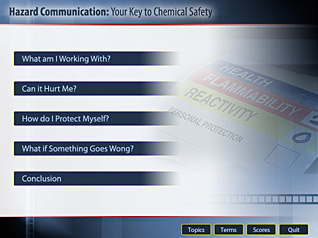
What am I Working With?
- Global Harmonization
- Signal words
- The hazard statement
- Precautionary statements and symbols
- Product identifier
- Manufacturer/supplier contact
- Color-coded labels
- When to label containers
- Material Safety Data Sheets (MSDS)
-
Can it Hurt Me?
- Recognizing chemical hazards
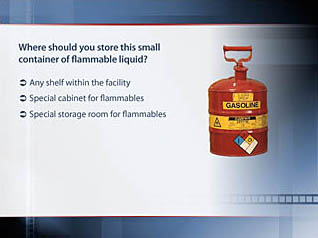
- Flammable material hazards
- Corrosive material hazards
- Toxic material hazards
-
How do I Protect Myself?
- Protection from flammable material hazards
- Protection from corrosive material hazards
- Protection from toxic material hazards
-
What if Something Goes Wrong?
- Responding to small spills
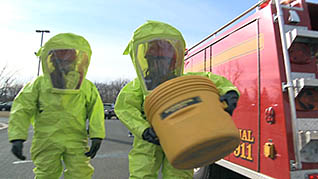
- Responding to large spills
- Your role during an emergency
Intended Performance Outcomes
 0.2
0.2
Upon successful completion of this course you will be better prepared to:
-
Recognize hazardous materials.
- Define Global Harmonization.
- List standard information found on manufacturer labels.
- Identify signal words found on labels.
- Explain the purpose of an exclamation mark symbol.
- Distinguish color meaning on color-coded labels.
- Differentiate the meaning of numbers within color-coded labels.
- Explain when not using a label is acceptable.
- Describe a Material Safety Data Sheet (MSDS).
-
Avoid chemical hazards.
- List chemical hazard categories.
- Define flammable hazards.
- Choose examples of corrosive materials.
- Differentiate between flammable and corrosive materials.
- Describe the effects of toxic materials.
-
Protect yourself from chemical hazards.
- Describe safe procedures when working with flammables.
- List typical PPE used with corrosives.
- Identify safe use procedures when working with toxins.
-
Follow proper procedures if something goes wrong.
- Describe the best way to clean a small spill of low-hazard material.
- Agree to never attempt a large spill clean-up without proper training and equipment.
- Identify the role of the general worker during an emergency.
© Mastery Technologies, Inc.
